
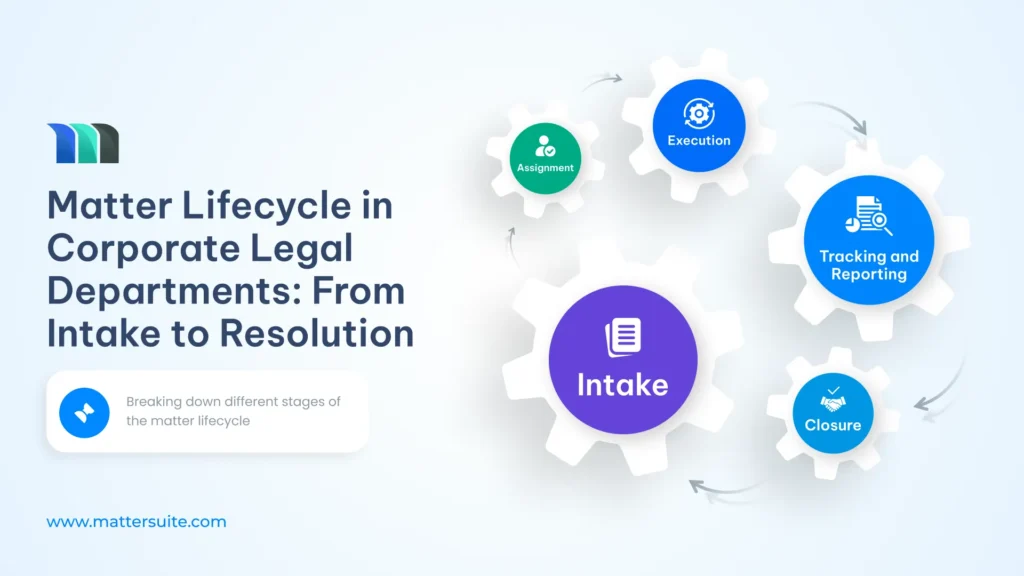
The process of how a matter moves from one standpoint to the next is the matter lifecycle. It involves capturing a request, assigning ownership, executing the legal work, and finally reaching closure. Every matter undergoes this process; therefore, it helps to have a clear and well-defined matter cycle. This ensures that every matter follows the same path, even if the practice area or the jurisdiction differs.
Understanding the matter lifecycle is less about defining the stages and more about what are the parts slow down the process. In this guide, we will be breaking down different stages of the matter lifecycle, the common problems faced by legal teams, and how they can be solved.
The 5 Stages of Matter Lifecycle
1. Capturing the Request (Intake)
In legal terms, this stage is known as intake. It starts when a request enters the system. It is the front door to legal workflow. It involves activities like collecting critical details and identifying potential risks. Tools like standardized intake forms and client portals help ease the process and capture every relevant piece of information.
- Receiving requests through standardized forms or portals
- Categorizing matters by priority and complexity
- Identifying missing information early to prevent delays
2. Assigning Ownership and Priority (Triage & Assignment)
After the matter is logged in to the system, it needs an owner. This may be an individual or a team responsible for moving the matter forward. Priorities are based on risk, impact, and deadlines, to ensure legal resources are utilized effectively. This way, high-stakes or time-sensitive matters get fast-tracked, and routine work follows a manageable queue.
- Designating responsibility to internal or external counsel
- Prioritizing tasks based on risk and urgency
- Setting deadlines and communication plans
3. Driving the Work Forward (Matter Execution)
With this stage, the core legal process takes place. It includes breaking down the matter into actionable tasks. The assigned legal professionals research laws, draft contracts, negotiate, seek approvals, and run compliance checks. This stage demands discipline, collaboration, and communication to prevent any roadblocks.
- Conducting legal research and drafting documents
- Coordinating with outside counsel and internal teams
- Holding periodic reviews and status updates
4. Maintaining Visibility (Matter Tracking & Reporting)
When the matter moves into core legal work, teams often lose sight of important things. Tracking progress, upcoming deadlines, budget, and resources keeps the case and the teams grounded in reality. Transparent reporting helps keep stakeholders in the loop and supports proactive adjustments.
- Monitoring deadlines and milestones
- Managing budgets and resource allocation
- Providing regular status reports to stakeholders
5. The Final Outcome (Resolution and Closure)
Case closing goes beyond just filing it away. This stage is extremely important because it involves finalizing all documents, billing, and approvals. Equally important is capturing lessons learned and knowledge gained. Keeping a note of what worked, what didn’t, and how future matters can be improved is essential.
- Completing document finalization and billing
- Archiving files for audits and future reference
- Conducting post-matter reviews for continuous improvement
Where Matter Lifecycles Actually Break
All legal professionals are aware of the matter lifecycle. The real issues are executing the stages in everyday life.
The Work Keeps Growing
As the matter starts, many changes appear. With every new request, more tasks are added that were not a part of the original plan. Budgets rise, and timelines extend, too. This shifts focus, and more time is spent catching up.
Gaps in Cross-Team Transitions
Matters require the collaboration of several teams. When handoffs take place, documents get lost, and context is lost. This leads to confusion, and teams have to take time to reconnect the pieces.
Billing Issues Delay Progress
Oftentimes, errors in time tracking and delayed invoices cause friction. This makes matters stay open longer than they need to, while billing questions are resolved.
Closure Gets Overlooked
When matters move towards the end, teams move on to the next request. Once the work ends, teams move on to the next request. When teams skip review, they lose the chance to learn from past work. The same delays and errors then appear in future matters.
How Legal Ops Teams Evaluate Matter Lifecycle Health
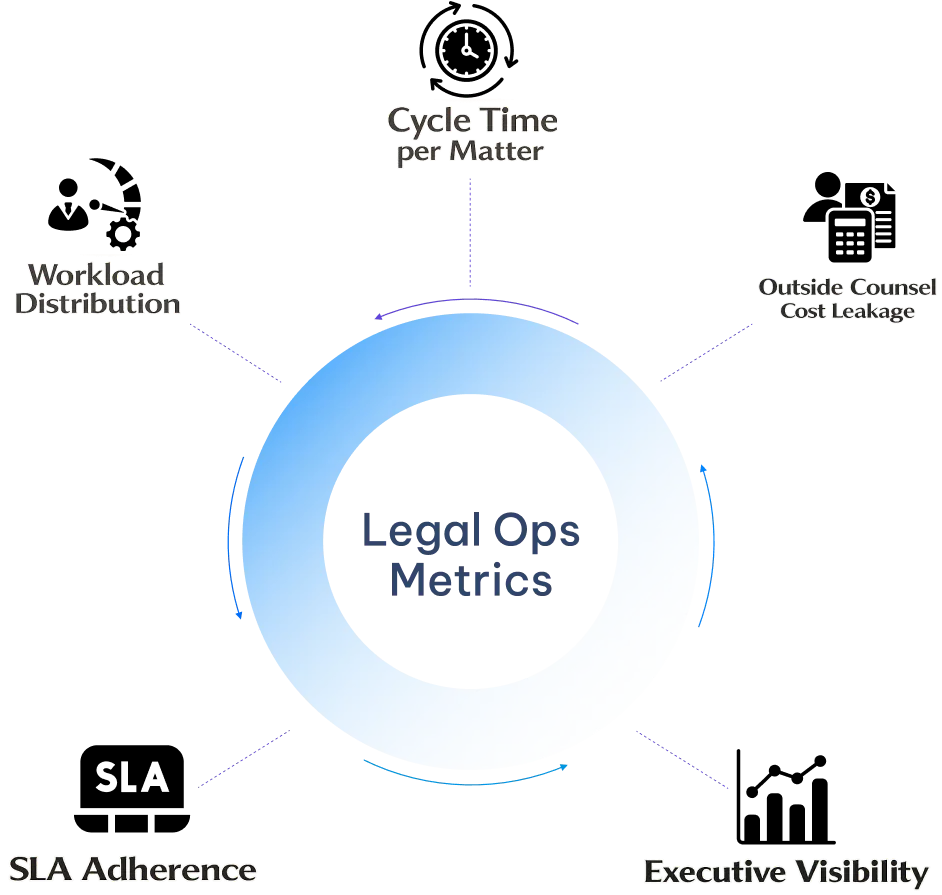
Legal operations teams focus on measures that show whether the system works in real conditions.
- Cycle time per matter
The time taken from intake to closure is known as cycle time per matter. This helps in identifying where delays occur and which parts need more focus. - Workload distribution
This metric shows if the work is spread across the team members evenly. The workload imbalance leads to burnout for some and underuse of others. - Outside counsel cost leakage
It is important to keep track of the spending. This metric reveals if the expenditure stays within expectation as the matter evolves. - SLA adherence
This measures whether internal commitments are being met. Missed SLAs often signal prioritization issues rather than a lack of effort. - Executive visibility
This determines whether leaders can see status, risk, and spend without manual reporting. Poor visibility forces teams to rely on updates instead of real-time insight.
These metrics shape decisions around staffing, process, and technology.
What a Mature Matter Lifecycle Looks Like
In mature legal teams, matters don’t float around in inboxes or depend on individual memory. Every request enters through a defined intake process, gets assessed consistently, and moves forward with clear ownership. There is no confusion about who is responsible, what the next step is, or when something is due.
What really sets maturity apart is predictability. Teams know how long certain types of matters usually take. They know where delays typically occur. They know which matters consume the most resources and which ones can be standardized or automated. This insight allows legal teams to plan better, advise the business more confidently, and avoid last-minute escalations.
Most importantly, a mature matter lifecycle creates alignment. Legal, business, finance, and leadership all see the same picture. Instead of chasing updates, stakeholders get clarity. Instead of reacting to issues, legal teams prevent them.
Matter Lifecycle in Practice
Let’s understand the matter lifecycle with a simple, real-world scenario.
Imagine a sales team needs a high-value enterprise contract reviewed within a tight deadline. The request enters the legal system through a standardized intake form. The form captures key details such as deal value, jurisdiction, deadline, risk level, and any non-standard clauses. Because the information is complete from the start, legal doesn’t lose time asking follow-up questions.
Next, the matter is triaged. It gets automatically marked as high priority as it is time-sensitive and assigned to a senior legal counsel. Ownership is clear, and expectations are set early.
During execution, the contract review is broken into tasks. Deadlines are visible, and stakeholders can track progress without sending constant emails.
As the work progresses, matter tracking ensures nothing important gets missed. Seniors can see the status at a glance. Budget and effort are monitored, and any delays are flagged early.
Once the contract is finalized, the matter is formally closed. Documents are stored securely, time and costs are logged, and key learnings are captured for future deals.
Conclusion
The purpose of a well-defined legal matter lifecycle is to reduce friction way before a matter even starts. When all the stages follow a consistent structure, the chaos reduces, and legal judgment is applied in the right place. The results are visible in fewer delays, clearer accountability, and better outcomes across every matter.
To make this consistency sustainable, modern-day teams rely on legal tech solutions. Platforms like MatterSuite support every stage of the legal matter lifecycle in a single, secure platform. This way, legal teams gain clarity, control, and the ability to scale without unnecessary friction.
Discover how MatterSuite brings clarity and control to the legal matter lifecycle → Book Demo
